Ad Scheduling & Devices
When the ads run, and which device the spend sits on.
- $770M+ managed spend
- Since 2006
- #6 in the Top 50 Most Influential PPC Experts
Most accounts are switched on all day, on every device, and nobody chose that. This section looks at the two settings nobody owns: when the ads run, and which screen they run on. It is written for the person who signs the invoice and for the person asked to explain the invoice. A marketing director who needs the schedule to make sense before the next budget round. A commercial director who sees cost per sale drift between weekdays and weekends. An independent consultant who has to tell a client that the delivery problem is a settings problem and not a creative problem.
The question this section answers
The buyer question is simple, and it gets asked late: is this account running when it should, and is it running on the device that pays? Everything else in the section is evidence for one of those two answers. Google reports neither of them by default. There is no dayparting report in the interface, and the device mix appears as a table row that most people read once and never again. So the question stays unanswered, and the money keeps moving.
A second question sits underneath it. Once you know that a large part of the spend runs in hours that earn little, the platform offers levers: bid adjustments by device, by hour, by location. Most accounts treat those levers as tuning dials and turn them until the cost looks better. The evidence here suggests they are better used as instruments for diagnosis, and that reading them as dials is how accounts end up with adjustments nobody can explain.
How to read it, in order
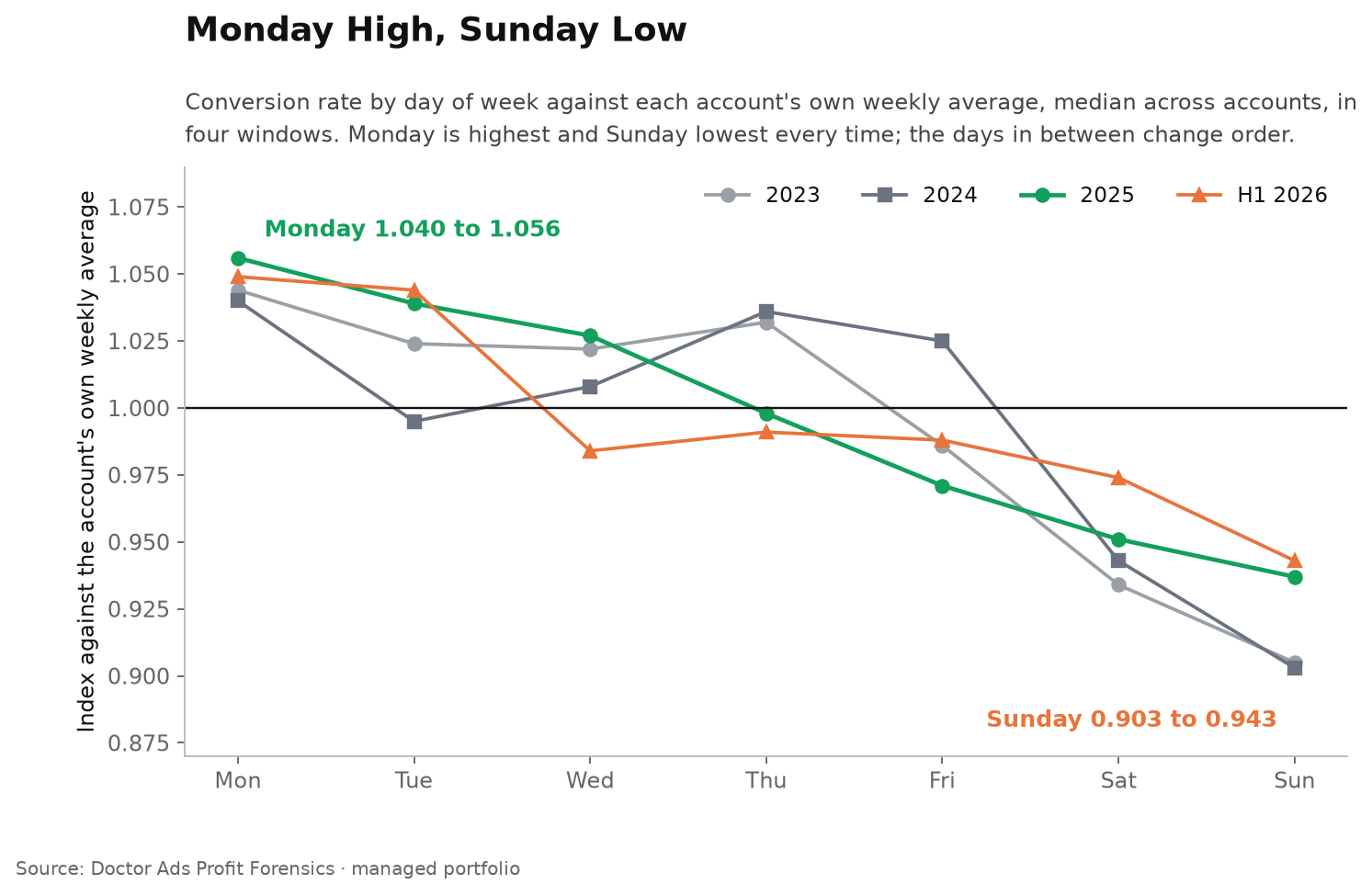
- Are clicks cheaper at weekends, and does the conversion rate follow comes first, because the shape of the week is the cheapest thing to check and the most often ignored.
- How often campaigns carry a schedule that restricts their hours comes next. It measures whether this decision was ever made, which changes what you should expect to find when you look.
- Where the dead hours sit in a typical account is the core study of the section, and it covers the part of the budget that runs in hours when the account's own click rate sits below its daily average.
- Where the device split really sits inside a single account moves the same question onto screens, and shows why the market level story and the account level story are two different stories.
- What device, hour and location bid adjustments are for under automated bidding closes the section, because it decides what you do with what you just found.
What this section will not do for you
It will not tell you whether your ads are good, and it will not repair a landing page that converts badly at any hour. It does not prescribe a schedule either, because the right hours for your account are the ones your own data supports, not the ones a rule of thumb supplies. What it gives you are the two distributions you need in order to argue for a decision: when your money runs, and on what. Once you have them, the bidding and budget section covers the campaigns themselves, and the conversions section covers whether a click that lands at midnight is worth what you paid for it.
0.98